Drug Testing Services for Small Construction Businesses – Employer Guide
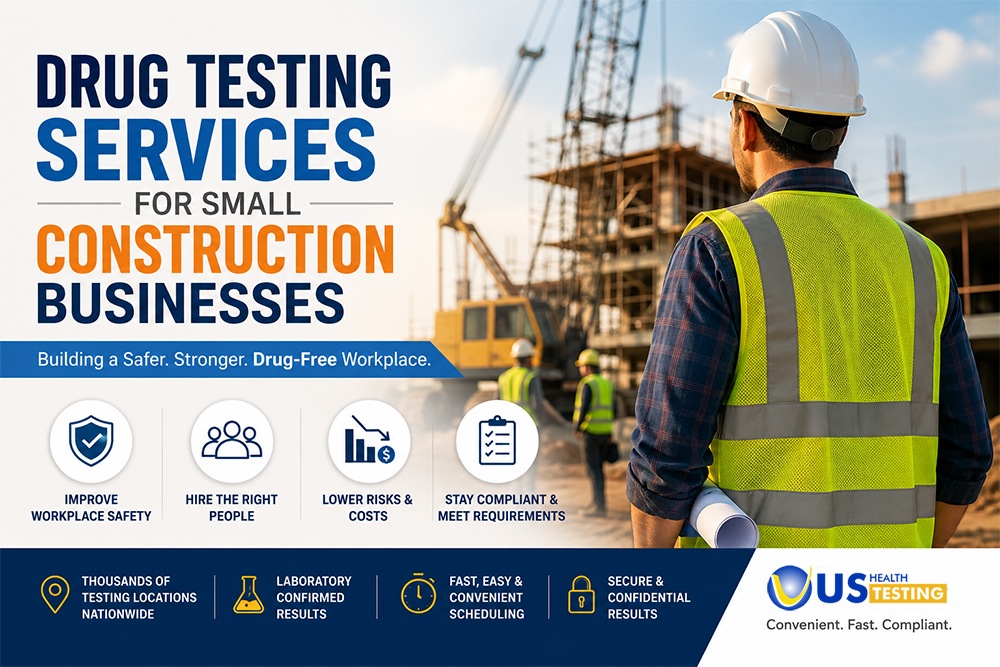
Running a small construction business comes with significant responsibilities. Whether you have five employees or fifty, your team works in high-risk environments where safety, productivity, and compliance are critical. Heavy equipment, power tools, elevated work areas, and physically demanding tasks leave little room for impaired judgment.
Implementing a professional employee drug testing program helps small construction companies reduce workplace accidents, maintain OSHA compliance efforts, improve hiring decisions, and create a safer job site.
US Health Testing makes it simple for construction employers across the United States to schedule drug and alcohol testing online with access to thousands of certified collection sites nationwide.
Why Drug Testing Matters for Small Construction Companies
Construction consistently ranks among the industries with the highest workplace injury rates. Even one impaired employee can place an entire crew at risk.
Drug testing helps employers:
- Reduce workplace accidents
- Improve employee safety
- Lower workers’ compensation claims
- Protect company reputation
- Reduce absenteeism
- Increase productivity
- Meet client contract requirements
- Support insurance and risk management efforts
- Promote a drug-free workplace culture
For smaller contractors, one serious accident can lead to expensive lawsuits, project delays, increased insurance premiums, and lost business opportunities.
A proactive drug testing program helps minimize these risks.
Common Challenges Small Construction Employers Face
Many small construction businesses believe drug testing is only for large corporations.
In reality, small employers often face greater risks because they have:
- Limited HR resources
- Small crews where every employee is essential
- Tight project deadlines
- Limited safety personnel
- Less administrative support
- Higher financial impact from workplace injuries
An affordable testing program helps level the playing field.
Construction Jobs That Benefit from Drug Testing
Drug testing is recommended for nearly every construction position, including:
- General laborers
- Carpenters
- Electricians
- Plumbers
- Roofers
- Concrete workers
- Heavy equipment operators
- Crane operators
- Welders
- Masonry contractors
- Excavation crews
- HVAC technicians
- Site supervisors
- Foremen
- Project managers
- CDL drivers
- Temporary construction workers
Any employee operating machinery or working around hazardous environments should be part of a workplace drug testing program.
Drug Testing Services Available for Construction Employers
A complete workplace drug testing program includes multiple testing options depending on your hiring practices and workplace policies.
Pre-Employment Drug Testing
Pre-employment drug testing helps employers hire qualified candidates while reducing hiring risks.
Testing applicants before they begin work helps:
- Screen new hires
- Reduce negligent hiring risks
- Improve workforce quality
- Support a drug-free workplace policy
Most construction employers require applicants to complete testing before their first day on the job.
Random Drug Testing
Random drug testing discourages workplace drug use because employees never know when they may be selected.
Benefits include:
- Reduces ongoing substance abuse
- Promotes workplace accountability
- Improves overall safety
- Demonstrates a consistent workplace policy
Random testing is especially valuable for companies operating heavy equipment.
Reasonable Suspicion Drug Testing
When supervisors observe signs of possible impairment, reasonable suspicion testing allows employers to respond quickly.
Common indicators include:
- Slurred speech
- Poor coordination
- Bloodshot eyes
- Unusual behavior
- Confusion
- Odor of alcohol or drugs
- Unsafe work practices
Supervisors should receive proper training on recognizing and documenting impairment.
Post-Accident Drug Testing
Following a workplace accident, post-accident testing may help determine whether drugs or alcohol contributed to the incident.
Testing should occur as soon as practical following company policy and applicable regulations.
Post-accident testing helps employers:
- Document incidents
- Support insurance investigations
- Maintain workplace safety
- Identify underlying safety concerns
Return-to-Duty Testing
Employees returning after a policy violation or rehabilitation program may be required to complete return-to-duty testing before resuming safety-sensitive work.
Follow-Up Drug Testing
Follow-up testing provides continued monitoring after an employee returns to work under a rehabilitation agreement.
Types of Drug Tests Available
Construction employers can choose from several laboratory testing methods.
Urine Drug Testing
Urine testing is the most popular option because it is:
- Affordable
- Highly accurate
- Laboratory confirmed
- Widely accepted
- Fast scheduling
Ideal for:
- Hiring
- Random testing
- Workplace programs
Hair Follicle Drug Testing
Hair testing offers a much longer detection window.
Advantages include:
- Detects long-term drug use
- Difficult to cheat
- Excellent for safety-sensitive positions
Common for:
- Heavy equipment operators
- Supervisors
- High-risk positions
Oral Fluid (Saliva) Drug Testing
Saliva testing is effective for identifying recent drug use.
Benefits include:
- Non-invasive
- Easy collection
- Difficult to substitute
- Useful for reasonable suspicion testing
Alcohol Testing
Construction employers may also conduct alcohol testing for:
- Post-accident situations
- Reasonable suspicion
- DOT compliance
- Return-to-duty programs
Common Drug Testing Panels
Depending on company policy, employers may choose:
5-Panel Drug Test
Screens for:
- Marijuana (THC)
- Cocaine
- Amphetamines
- Opiates
- PCP
10-Panel Drug Test
Includes the 5-panel drugs plus additional prescription medications and controlled substances.
Expanded Drug Panels
Available for employers requiring broader testing based on company policy, customer requirements, or industry regulations.
DOT vs Non-DOT Drug Testing
Many construction companies operate commercial vehicles requiring Department of Transportation (DOT) compliance.
DOT Drug Testing
Required for:
- CDL drivers
- FMCSA-regulated employees
- Safety-sensitive transportation positions
DOT testing follows strict federal procedures.
Non-DOT Drug Testing
Used for:
- General construction workers
- Contractors
- Administrative employees
- Supervisors
- Skilled trades
Most small construction businesses primarily use non-DOT testing while maintaining separate DOT programs for CDL drivers.
How Drug Testing Protects Your Business
Reduces Workplace Accidents
Employees under the influence have slower reaction times and impaired judgment.
Drug testing helps reduce preventable accidents.
Improves Productivity
Drug-free employees generally demonstrate:
- Better attendance
- Higher productivity
- Improved concentration
- Greater reliability
Lowers Workers’ Compensation Costs
Fewer accidents often lead to:
- Reduced claims
- Lower insurance costs
- Less lost work time
Supports OSHA Safety Goals
While OSHA does not require routine workplace drug testing, employers should ensure their testing policies comply with applicable OSHA guidance regarding post-incident reporting and do not discourage employees from reporting workplace injuries.
A well-written policy supports both safety and compliance.
Enhances Company Reputation
Many general contractors require subcontractors to maintain drug-free workplace programs before awarding contracts.
Having a documented testing program may improve competitiveness when bidding on projects.
How Often Should Construction Companies Test?
Most employers use a combination of:
- Pre-employment testing
- Random testing
- Reasonable suspicion testing
- Post-accident testing
- Return-to-duty testing
- Follow-up testing
Combining these testing types provides the strongest workplace safety program.
Creating a Drug-Free Workplace Policy
Every construction company should maintain a written policy covering:
- Purpose of testing
- Who is subject to testing
- Types of testing performed
- Employee responsibilities
- Consequences of policy violations
- Confidentiality procedures
- Appeals process
- State-specific legal considerations
Policies should be applied consistently to all covered employees.
Choosing the Right Drug Testing Provider
Look for a provider that offers:
- Nationwide testing locations
- Laboratory-confirmed testing
- SAMHSA-certified laboratories where applicable
- Medical Review Officer (MRO) review for non-negative results
- Online ordering
- Fast scheduling
- Secure reporting
- Employer support
- DOT and non-DOT testing options
- Flexible testing programs for small businesses
A provider experienced in serving construction employers can simplify program administration and help keep projects moving.
Why Small Construction Businesses Choose US Health Testing
US Health Testing provides convenient, nationwide workplace drug testing designed for employers of all sizes.
Benefits include:
- Easy online ordering
- Thousands of collection locations across the U.S.
- Laboratory-based testing
- Fast scheduling
- Employer-friendly ordering process
- DOT and non-DOT testing
- Urine, hair, saliva, and alcohol testing
- Individual and bulk employee testing
- Secure result reporting
- Responsive customer support
Whether you manage a local remodeling company, roofing business, excavation contractor, or commercial construction firm, you can schedule testing quickly without long-term contracts.
Frequently Asked Questions
Does my small construction business need a drug testing program?
While not universally required by law, many construction employers implement drug testing to improve safety, reduce liability, satisfy client requirements, and support a drug-free workplace.
What is the best drug test for construction employees?
Urine drug testing is the most common choice because it is affordable, accurate, and widely accepted. Hair testing may be preferred for positions requiring a longer drug use history.
How quickly can employees complete testing?
In most cases, employees can visit a nearby collection site shortly after receiving their registration information, depending on location availability.
Can I order tests for multiple employees?
Yes. Employers can schedule individual employees or place bulk testing orders for larger crews.
Are laboratory drug tests more accurate than instant tests?
Yes. Laboratory testing includes strict chain-of-custody procedures and confirmation testing for non-negative results, providing greater accuracy and defensibility.
Can construction companies perform random drug testing?
Yes. Random drug testing is commonly used in the construction industry, provided it is conducted according to a written policy and applicable federal, state, and local laws.
Protect Your Construction Workforce with Reliable Drug Testing
A strong drug testing program is one of the most effective ways for small construction businesses to improve workplace safety, reduce hiring risks, and protect employees and customers. Whether you are hiring your first employee or managing multiple crews across several job sites, a professionally administered testing program helps create a safer, more productive work environment.
With nationwide laboratory access, convenient online ordering, and comprehensive testing options, US Health Testing makes it easy for construction employers to implement a workplace drug testing program that fits their business needs.
Schedule your construction employee drug tests online today and build a safer, more compliant workplace with fast, reliable nationwide drug testing services.