How Long Do Drugs Stay in Your System? Complete Detection Times Guide
How Long Do Drugs Stay in Your System?
One of the most common questions people ask before a drug test is, “How long do drugs stay in your system?” The answer isn’t always straightforward. Drug detection times vary depending on the type of drug, the testing method used, your metabolism, body composition, frequency of use, hydration level, and overall health.
Whether you’re preparing for a pre-employment screening, DOT drug test, court-ordered testing, or simply looking for accurate information, understanding drug detection windows can help you make informed decisions.
In this comprehensive guide, we’ll explain how long common drugs remain detectable, what influences detection times, and how different drug testing methods compare.
What Does “Stay in Your System” Mean?
When someone says a drug stays in your system, it means the drug or its metabolites remain detectable in your body. After taking a drug, your body breaks it down into chemical compounds called metabolites. Drug tests typically detect these metabolites rather than the original substance.
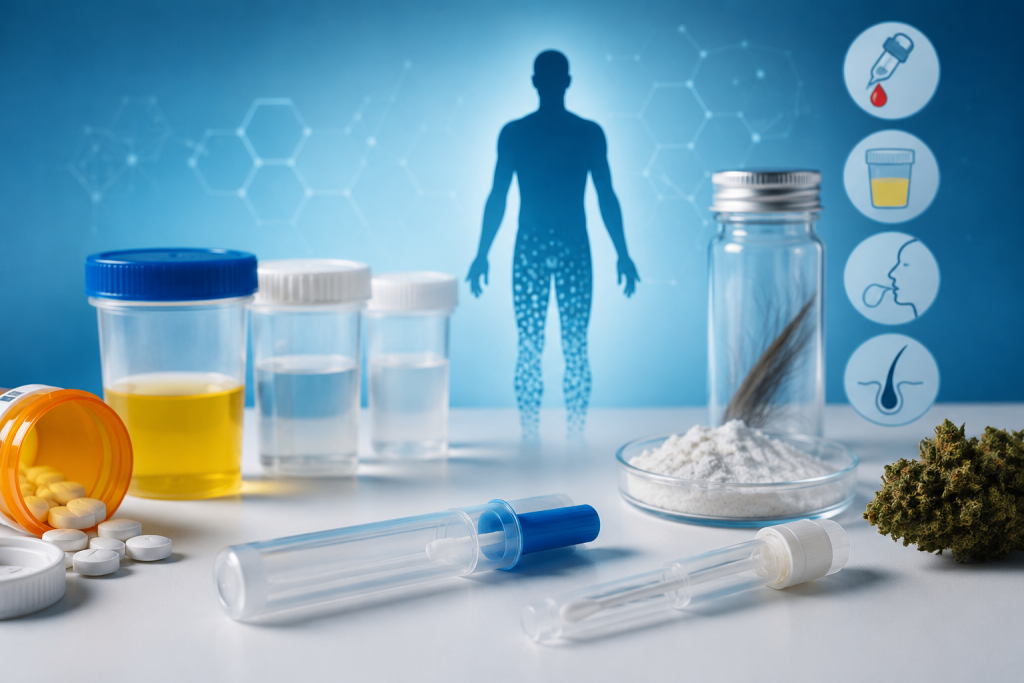
Even after the effects wear off, traces may remain in your urine, blood, saliva, or hair for days, weeks, or even months.
Average Drug Detection Times
The table below provides general detection windows for commonly tested substances.
| Drug | Urine | Blood | Saliva | Hair |
|---|---|---|---|---|
| Marijuana (THC) | 3-30+ days | 1-2 days | Up to 72 hours | Up to 90 days |
| Cocaine | 2-4 days | 12-48 hours | 1-2 days | Up to 90 days |
| Amphetamines | 2-4 days | 12-24 hours | 1-3 days | Up to 90 days |
| Methamphetamine | 2-5 days | 1-3 days | 1-4 days | Up to 90 days |
| Opiates | 1-4 days | 24 hours | 1-3 days | Up to 90 days |
| Heroin | 1-3 days | Up to 12 hours | 1-2 days | Up to 90 days |
| Fentanyl | 2-4 days | Up to 48 hours | 1-3 days | Up to 90 days |
| Oxycodone | 2-4 days | Up to 24 hours | 1-3 days | Up to 90 days |
| Benzodiazepines | 3-30 days | 1-2 days | 2-5 days | Up to 90 days |
| MDMA (Ecstasy) | 2-4 days | 1-2 days | 1-2 days | Up to 90 days |
| PCP | 7-14 days | Up to 24 hours | 1-3 days | Up to 90 days |
Note: Detection times are estimates and vary between individuals.
Factors That Affect How Long Drugs Stay in Your System
No two people process drugs exactly the same way. Several factors determine how long a substance remains detectable.
1. Type of Drug
Every drug has a different chemical structure and half-life. Some substances leave the body within hours, while others remain detectable for weeks.
For example:
- Cocaine typically clears quickly.
- Marijuana can remain detectable for over a month in heavy users.
- Long-acting benzodiazepines may be detectable for several weeks.
2. Frequency of Use
The more frequently a drug is used, the longer it generally stays in the body.
Occasional User
- Faster elimination
- Shorter detection window
Regular User
- Drug accumulates in tissues
- Longer detection period
Heavy Chronic User
- May remain detectable for weeks or months
Marijuana is the best example because THC is stored in body fat.
3. Metabolism
People with faster metabolisms generally eliminate drugs more quickly.
Factors influencing metabolism include:
- Age
- Physical activity
- Liver function
- Genetics
- Overall health
4. Body Fat Percentage
Fat-soluble drugs, especially THC, accumulate in fatty tissue.
People with higher body fat percentages may test positive longer than lean individuals.
5. Age
Older adults often metabolize drugs more slowly than younger individuals, resulting in longer detection times.
6. Liver and Kidney Function
The liver metabolizes drugs while the kidneys help remove them from the body.
Poor liver or kidney function can significantly increase detection windows.
7. Hydration
Hydration affects urine concentration but does not rapidly eliminate drugs from the body.
Drinking excessive water may dilute urine, but certified laboratories routinely test for dilution.
How Long Does Marijuana Stay in Your System?
Marijuana has one of the longest detection windows because THC is stored in body fat.
Approximate urine detection:
- One-time use: 3 days
- Moderate use: 5-7 days
- Daily use: 10-30 days
- Heavy chronic use: 30-90 days (in some cases)
Hair testing can detect marijuana for approximately 90 days.
How Long Does Cocaine Stay in Your System?
Cocaine has a relatively short half-life.
Typical detection:
- Blood: Up to 24 hours
- Saliva: 1-2 days
- Urine: 2-4 days
- Hair: Up to 90 days
Heavy users may test positive slightly longer.
How Long Do Opioids Stay in Your System?
Common opioids include:
- Morphine
- Codeine
- Oxycodone
- Hydrocodone
- Heroin
- Fentanyl
Average urine detection:
- Codeine: 1-2 days
- Morphine: 2-3 days
- Oxycodone: 2-4 days
- Hydrocodone: 2-4 days
- Heroin: 1-3 days
- Fentanyl: 2-4 days
How Long Do Amphetamines Stay in Your System?
Amphetamines include:
- Adderall
- Dexedrine
- Methamphetamine
Detection windows:
- Urine: 2-4 days
- Blood: Up to 24 hours
- Saliva: 1-3 days
- Hair: Up to 90 days
How Long Do Benzodiazepines Stay in Your System?
Common benzodiazepines include:
- Xanax
- Valium
- Ativan
- Klonopin
Detection depends on the medication.
Short-acting drugs:
- Around 3-5 days
Long-acting drugs:
- Up to 30 days
Drug Detection by Test Type
Urine Drug Testing
Urine testing is the most common testing method because it is:
- Affordable
- Reliable
- Non-invasive
- Suitable for workplace testing
- Widely accepted
Most employers use urine drug testing for pre-employment and random screening.
Hair Drug Testing
Hair follicle testing offers the longest detection window.
Advantages include:
- Detects long-term drug use
- Difficult to tamper with
- Approximately 90-day history
Hair testing is commonly used for:
- Court cases
- Child custody
- Employment screening
- Safety-sensitive positions
Saliva Drug Testing
Saliva testing detects recent drug use.
Typical window:
- 24 to 72 hours
Benefits include:
- Easy collection
- Observed testing
- Immediate administration
- Good for post-accident testing
Blood Drug Testing
Blood tests detect current impairment rather than historical use.
Detection window:
Usually only a few hours to two days.
Blood testing is common in:
- Medical emergencies
- DUI investigations
- Hospital settings
Can You Speed Up Drug Elimination?
Many websites promote detox drinks, pills, or home remedies claiming to eliminate drugs quickly.
The truth is that there is no scientifically proven method that instantly removes drugs from your body.
Your body naturally eliminates drugs through:
- Liver metabolism
- Kidney filtration
- Urination
- Sweat (minimal contribution)
Healthy habits such as proper hydration, balanced nutrition, regular exercise, and adequate sleep support overall health but do not guarantee faster drug elimination or help someone “beat” a drug test.
Can Secondhand Smoke Cause a Positive Marijuana Test?
Under normal circumstances, casual exposure to secondhand marijuana smoke is unlikely to produce a positive workplace drug test.
Only prolonged exposure in extremely confined, poorly ventilated environments may temporarily increase THC levels, and even then, confirmed positive results are uncommon.
Why Detection Times Vary So Much
Drug detection charts provide averages—not guarantees.
Laboratories also use different testing cutoffs, confirmation methods, and specimen collection procedures.
Variables include:
- Drug purity
- Dosage
- Route of administration
- Individual metabolism
- Test sensitivity
- Laboratory cutoff levels
For these reasons, no chart can predict the exact time someone will test negative.
Final Thoughts
Understanding how long drugs stay in your system is important for workplace compliance, legal requirements, healthcare decisions, and personal awareness. Detection times vary based on the substance, testing method, frequency of use, and individual biological factors.
Urine testing remains the standard for most employment and compliance programs, while hair testing provides the longest historical detection window. Blood and saliva tests are more effective for identifying recent drug use.
If you need drug testing for employment, DOT compliance, occupational health, legal matters, or personal testing, choosing a certified testing provider ensures accurate collection procedures, reliable laboratory analysis, and confidential results.
Frequently Asked Questions
How long does weed stay in urine?
Occasional users may test positive for approximately 3 days, while heavy daily users may remain positive for 30 days or longer.
What drug test has the longest detection window?
Hair drug testing offers the longest detection period, typically up to 90 days after drug use.
Which drug test is most commonly used by employers?
Urine drug testing is the most widely used method because it is cost-effective, accurate, and accepted across many industries.
Can drinking lots of water help you pass a drug test?
Drinking water may dilute urine but does not remove drugs from your body. Laboratories routinely check specimen validity, including dilution indicators.
Does exercise remove drugs faster?
Regular exercise supports overall health, but there is no reliable evidence that exercising immediately before a drug test will significantly shorten detection times.
Can prescription medications cause a positive drug test?
Yes. Certain legally prescribed medications can trigger positive screening results. This is why it is important to disclose valid prescriptions to the Medical Review Officer (MRO) when requested. Confirmatory testing helps distinguish many prescribed medications from illicit drug use.
Is hair drug testing more accurate than urine testing?
Hair testing is better for identifying long-term patterns of drug use, while urine testing is generally preferred for detecting more recent use. The “best” test depends on the purpose of the screening.