
FDA Finalizes Rule Clearing Major Hurdle for DOT Oral Fluid Drug Testing
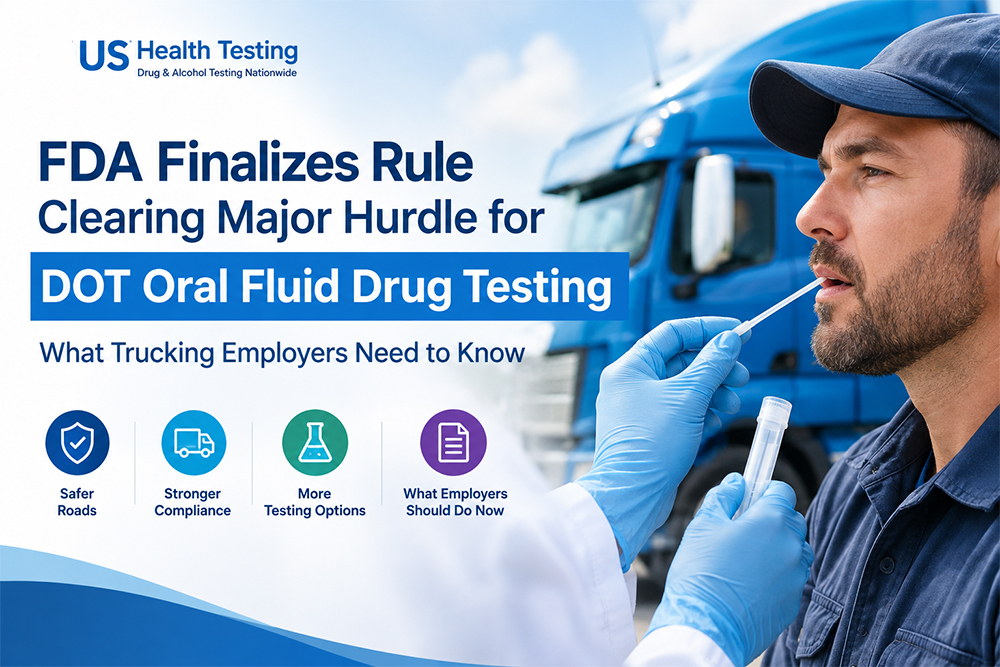
The U.S. trucking industry has taken an important step toward modernizing workplace drug testing.
On October 7, 2026, the American Trucking Associations (ATA) announced that the U.S. Food and Drug Administration (FDA) had finalized a rule removing a major regulatory obstacle that had delayed the adoption of oral-fluid drug testing for federally regulated workplaces.
The change could eventually give motor carriers and other safety-sensitive employers another testing option beyond urine testing. However, DOT-regulated employers cannot immediately begin using oral fluid for DOT drug tests.
At least two laboratories must first be certified by the U.S. Department of Health and Human Services (HHS) to perform oral-fluid testing under the federal program.
So, what exactly changed, and what does it mean for trucking companies, CDL drivers, employers, and drug-testing programs?
Let’s take a closer look.
What Did the FDA Change?
The FDA finalized an order expanding exemptions from the 510(k) premarket notification requirement for certain clinical toxicology test systems used in federal drug testing programs.
The 510(k) process is an FDA regulatory pathway used for certain medical devices. According to the FDA’s final order, the previous regulatory framework created an obstacle for laboratories seeking to move forward with oral-fluid testing for federal drug-testing programs.
The new FDA action removes that specific obstacle for qualifying testing systems.
This is significant because DOT had already established regulations allowing oral fluid as a drug-testing methodology, but implementation had been held up because the required certified laboratories were not available.
In simple terms:
FDA rule change → laboratory development/certification can move forward → HHS certification of at least two laboratories → DOT oral-fluid testing can eventually become available.
The process is moving forward, but there are still steps remaining.
Does This Mean Trucking Companies Can Use DOT Oral Fluid Testing Now?
No.
This is one of the most important points employers need to understand.
The FDA does not control the DOT drug-testing program. The FDA’s final order removes a regulatory barrier related to testing devices, but it does not independently authorize employers to start using oral fluid for DOT testing.
FMCSA’s existing rule states that employers will need at least two HHS-certified laboratories capable of performing oral-fluid testing before the method can be implemented under the DOT program.
The DOT currently maintains a list of laboratories certified to participate in its drug-testing program.
Therefore, employers should continue following the current DOT drug-testing requirements and approved testing procedures until federal agencies announce that oral-fluid testing is operational for DOT-regulated testing.
Why Is Oral Fluid Drug Testing Important for Trucking?
For years, trucking organizations have argued that the federal drug-testing system should provide employers with additional testing methods.
One concern involves the integrity of urine specimens.
The ATA cited an analysis of Quest Diagnostics data showing substantial increases in substituted and invalid urine specimens among federally regulated, safety-sensitive workers between 2022 and 2023.
Oral-fluid collection offers a different approach.
Because oral-fluid specimens can be collected under direct observation, the method can make certain forms of specimen substitution more difficult.
This could potentially provide employers with another tool for maintaining the integrity of workplace drug-testing programs.
Oral Fluid vs. Urine Drug Testing
Both urine and oral-fluid testing can play important roles in workplace drug-testing programs, but they are different collection methods.
| Feature | Urine Drug Testing | Oral Fluid Drug Testing |
|---|---|---|
| Specimen | Urine | Saliva/oral fluid |
| Collection process | Urine specimen collection | Oral-fluid collection |
| Specimen substitution concerns | Can be a concern | Direct collection can reduce substitution opportunities |
| Intrusiveness | More involved collection process | Generally less intrusive |
| DOT availability | Currently established | Regulatory pathway exists, but implementation requires certified laboratories |
| Federal implementation | Currently available | Awaiting required laboratory certification |
| Best use | Established DOT and workplace testing | Potential future DOT and workplace option |
Employers should not choose a testing method solely based on convenience. Testing requirements depend on the applicable federal regulations, employer policy, testing purpose, and type of workforce.
What Does the FDA Decision Mean for CDL Employers?
For trucking companies and fleet managers, the FDA action is primarily a future-focused development.
Employers should not immediately change their DOT testing procedures based on the announcement.
Instead, this is a good opportunity to review current drug-testing policies and ensure that testing programs are properly aligned with DOT requirements.
Fleet managers should pay attention to future announcements from:
- U.S. Department of Transportation
- Federal Motor Carrier Safety Administration
- U.S. Department of Health and Human Services
- Substance Abuse and Mental Health Services Administration
- U.S. Department of Transportation Office of Drug and Alcohol Policy & Compliance
As oral-fluid laboratory certification progresses, employers will have more information about when and how the testing method can actually be implemented.
Could Hair Drug Testing Also Become More Accessible?
The FDA action may have implications beyond oral-fluid testing.
The ATA said the rule could help pave the way for broader modernization of federal drug-testing programs, including potential future use of additional testing methodologies such as hair testing.
However, employers should distinguish between creating a regulatory pathway and actual authorization for a specific federal testing program.
The FDA itself emphasized in its final order that it does not oversee federal workplace drug-testing programs and does not determine whether oral fluid or hair testing can be used under those programs.
That distinction is especially important for DOT employers.
What Should Trucking Employers Do Now?
The FDA announcement does not require employers to change their current DOT drug-testing programs.
Instead, employers should focus on the fundamentals.
1. Continue following current DOT requirements
Do not switch DOT testing methods until the appropriate federal agencies establish that oral-fluid testing is available for DOT-regulated programs.
2. Review your drug-testing policy
Make sure your company policy clearly explains:
- Pre-employment testing
- Random testing
- Post-accident testing
- Reasonable suspicion testing
- Return-to-duty testing
- Follow-up testing
- DOT vs. non-DOT testing
3. Monitor oral-fluid testing developments
The FDA decision removes an important barrier, so the next stage will be laboratory development and certification.
4. Keep DOT and non-DOT programs separate
A testing method that may be available for a non-DOT workplace program does not automatically mean that it can be used for a DOT-regulated test.
Employers should verify the regulatory requirements applicable to each testing program.
5. Work with a qualified testing provider
A drug-testing provider can help employers understand available testing options and ensure orders are matched to the appropriate testing program.
What Happens Next?
The FDA’s action represents an important step, but it is not the final step.
The next major milestone is the availability of at least two HHS-certified laboratories capable of performing oral-fluid testing for federal drug-testing programs.
Once the necessary laboratory infrastructure and federal requirements are in place, DOT-regulated employers could eventually have another drug-testing methodology available to them.
This could be particularly significant for the trucking industry, where employers are looking for effective ways to maintain drug-testing integrity while protecting highway safety.
What This Means for Truck Drivers
For CDL drivers, the immediate impact is limited.
Drivers should continue complying with their employer’s existing DOT drug-testing requirements.
The FDA announcement does not mean that drivers will suddenly be required to provide an oral-fluid specimen instead of a urine specimen.
If DOT oral-fluid testing becomes operational in the future, employers will need to communicate the applicable procedures to their drivers.
The Bigger Picture: Modernizing Workplace Drug Testing
The FDA’s decision reflects a broader discussion about modernizing workplace drug testing.
Urine testing remains an established component of federal drug-testing programs. However, employers and industry organizations have increasingly explored whether additional testing methodologies could strengthen specimen integrity and improve the ability to respond to changing drug threats.
The ATA has advocated for expanded testing options for years, arguing that modern drug-testing programs should provide employers with effective tools to protect employees and the public.
The FDA’s final rule removes one significant barrier.
Now, attention will shift toward laboratory certification and the remaining federal steps necessary to make oral-fluid testing operational within regulated programs.
Final Takeaway
The FDA’s October 2026 decision is an important development for the future of workplace and transportation drug testing.
It removes a major regulatory hurdle that had prevented laboratories from moving forward with oral-fluid testing for federal drug-testing programs.
But the change does not mean DOT oral-fluid testing is available immediately.
For trucking companies, the next major milestone will be the certification of at least two laboratories capable of performing oral-fluid testing under the federal program.
Until then, employers should continue following existing DOT drug-testing requirements while preparing for a potential expansion of testing options in the future.
US Health Testing helps employers and individuals access laboratory-based drug and alcohol testing services nationwide. Employers can use available testing programs for DOT and non-DOT workplace needs while staying informed about changes affecting the drug-testing industry.
Frequently Asked Questions
Is oral-fluid drug testing approved for DOT testing?
DOT regulations already provide for oral-fluid testing, but employers cannot simply begin using the method today. At least two HHS-certified laboratories must be available to perform oral-fluid testing before the method can be implemented under the DOT program.
Can trucking companies switch from urine to oral fluid now?
No. Employers should continue following the current DOT requirements until the federal requirements for oral-fluid testing are satisfied and the method is officially available for DOT-regulated testing.
What did the FDA announce in October 2026?
The FDA finalized an order expanding 510(k) exemptions for certain clinical toxicology test systems used in federal drug-testing programs. The change removes a regulatory obstacle that had hindered the development and certification pathway for oral-fluid testing.
Why is oral-fluid testing being considered?
Oral-fluid collection can provide a less intrusive collection method and, because the collection can be directly observed, may reduce certain opportunities for specimen substitution or tampering.
Does the FDA decision automatically approve hair testing for DOT?
No. The FDA action may help remove regulatory barriers affecting testing technologies, but the FDA does not determine whether a particular methodology can be used in DOT or other federal workplace drug-testing programs.
Should employers change their DOT drug-testing policy because of this announcement?
Not yet. Employers should continue following current DOT requirements and monitor announcements from DOT, HHS, SAMHSA, and FMCSA regarding the implementation of oral-fluid testing.
Resource:
https://www.trucking.org/news-insights/fda-finalizes-oral-fluid-drug-testing-following-ata-advocacy